Article IT Leaders Reveal the State of Technology in the Workplace
The titan tech companies of Silicon Valley have everything from built-in bars to game rooms to meditation sanctuaries in their offices. Clearly, workspaces are a lot different than they used to be.
By Claudia Hrynyshyn / 19 Jun 2018 / Topics: Modern workplace

Cisco’s headquarters in San Jose, California, for example, is a tech super campus complete with sensor technology and open floor plans that encourage collaboration — not to mention the smart boardroom with an entire wall dedicated to a video display.
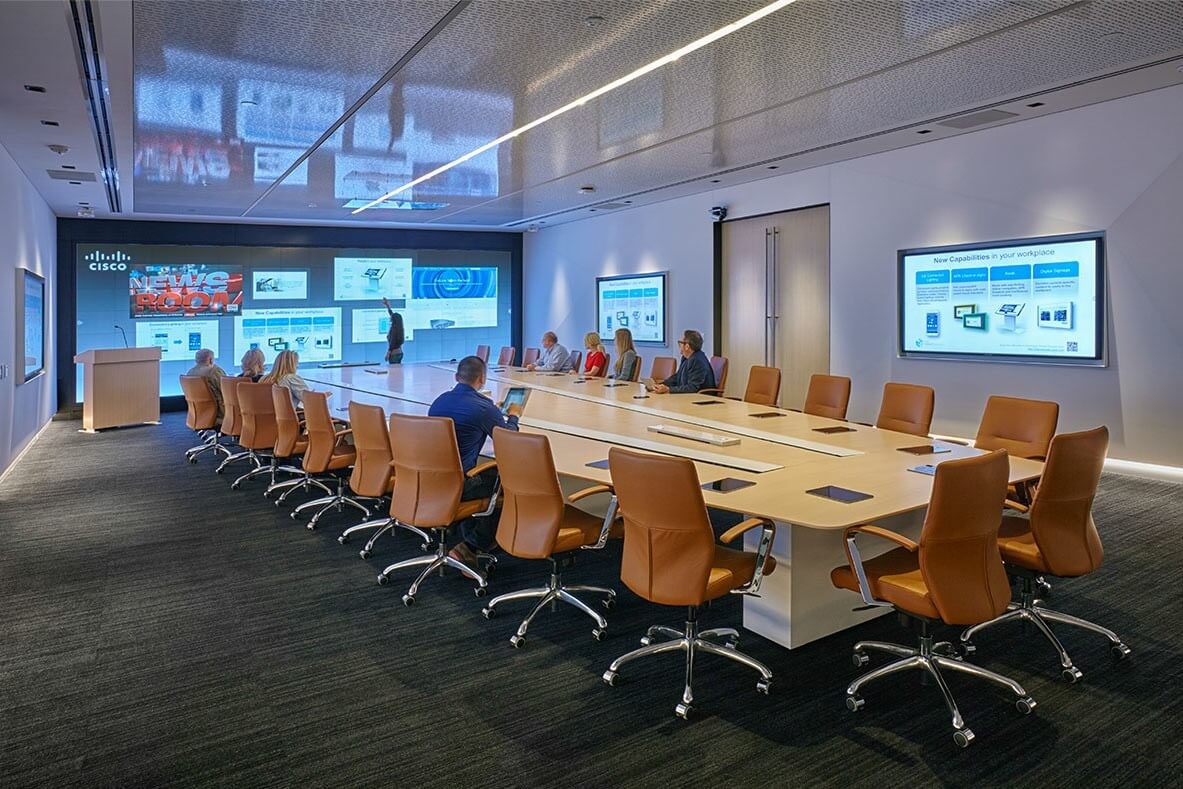 Figure 1: Cisco’s Building 10 headquarters boasts a meeting room with a full video wall and advanced telepresence technology.
But Cisco’s campus is something much more than state-of-the-art bravado; its transformation has been a tactical marriage of technology and the people who use it.
Inspired by this link, Insight commissioned Harvard Business Review to find out how IT leaders really feel about their workplace technology: their triumphs, challenges and what the future holds for collaboration and end-user computing.
Here are five stand-out findings from the Harvard Business Review report on the connected workforce:
1. Companies have the right tech, but they may not be using it effectively.
With remote, mobile work continuing its upsurge, companies are indeed adjusting, often cobbling together solutions to launch mobile-friendly, pro-collaboration initiatives.
But while 73% of IT leaders say their systems facilitate remote work — and 61% say their systems enable collaboration — only 40% say these technologies allow their employees to work productively.
Onward and upward: The new-era worker is more unshackled than ever. This infographic takes you down the path of where today’s workers have been — and where they’re headed.
So where’s the disconnect? Based on other findings within the report, systems may be modern and well-intentioned — they’re just not talking to each other.
In response to the question “What keeps employees from using technology to connect and collaborate?” the most cited reason is disparate systems across the organization. Other obstacles include:
- Unwieldly employee access to core business data and/or applications without IT or financial help
- Overly stringent security measures
- Slow hardware, software and networking technologies
- Lack of skills to leverage appropriate tools
2. Budget is the biggest barrier to innovation.
Although some workplaces are further along the journey to a more connected workforce, more than a third of IT leaders say their computing systems and related technology are behind the technology curve. Of that number, 55% cite budgetary constraints as their primary hurdle.
What’s in a journey? Trends point to adopting cloud-based services, upgrading operating systems and more. This guide calls out 6 critical milestones to hit when transitioning.
The budget barrier comes as no surprise for a few reasons. For one, 30% of those surveyed say IT staff is too busy supporting legacy systems to introduce new technology — and support costs rise the more outdated systems become. In a separate IDG report released in January, 56% of businesses said funding innovation was “extremely challenging.”
Other complementary research drills further down into IT spending habits, showing the lion’s share of budgets going to “keeping-the-lights-on” maintenance. According to a 2017 survey conducted by Forbes and commissioned by BMC Software, 85% of IT organizations are spending as much or more keeping the lights on today as they were three years ago.
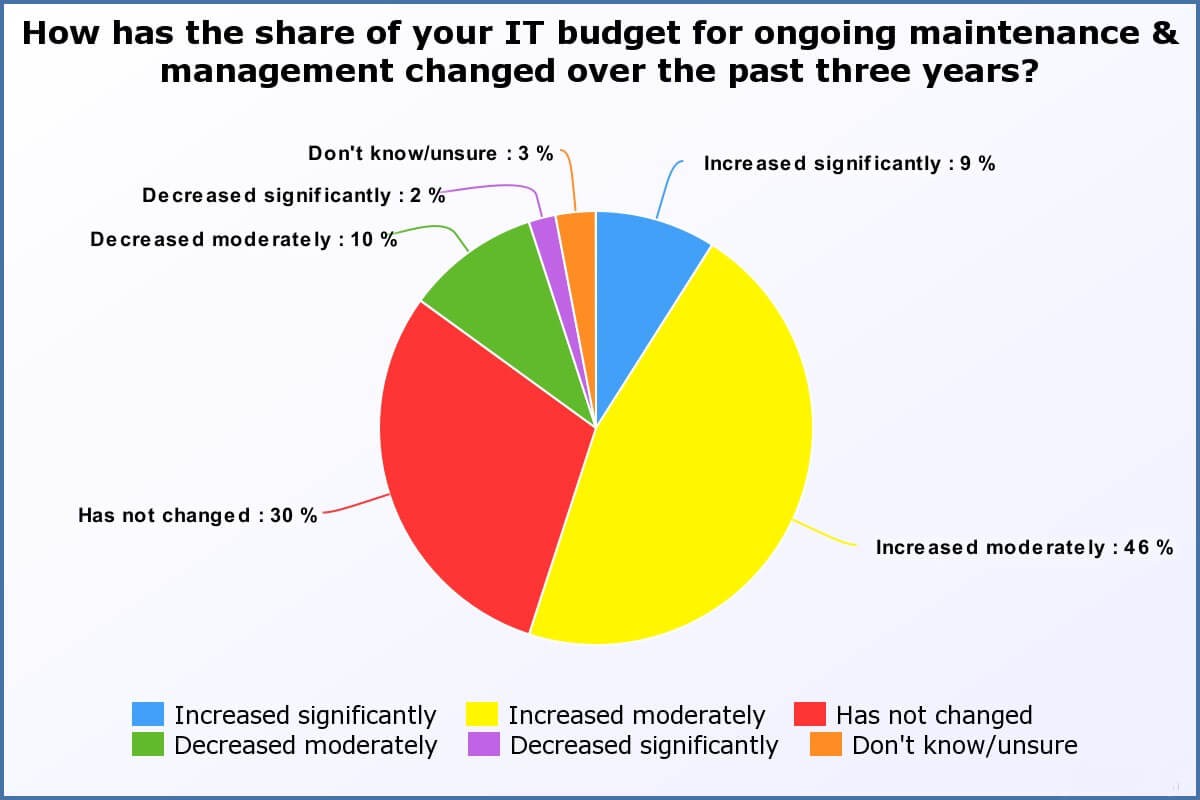 Figure 2: While 2% of respondents say they’re spending significantly less on maintenance and management, 85% report their maintenance budgets are unchanged or increasing.
In a world where tech-driven innovation is the new business frontier, findings like these validate something very honest about IT leaders’ experiences: Digital transformation, although a rousing industry buzzword, is a slow and steady process.
3. A technology investment is a people investment.
In the workplace, technology is not only used to engage workers; it’s used to invest in them — a feeling overwhelmingly shared by survey respondents.
Survey answers vary based on the company’s degree of connectivity (how seamless it is for employees to work, whether alone or with others). But all answers point to the same idea: The more connected employees are, the better the business outlook when it comes to attracting and retaining workers.
- 58% say the state of a company’s technology factors into decisions by job candidates about where they want to work.
- Among companies with low connectivity, 72% strongly agree that having outdated technology makes it harder to retain employees with high-value skills and experience — compared to only 33% of companies with high connectivity.
- Companies with high levels of connectivity are more likely to introduce additional self-service and automation features in the next two years.
To that last point, another finding in the survey reveals 63% of employees want more self-service access to critical knowledge and data.
4. Technology helps drive market position and revenue.
Using technology to improve work experiences is a worthy objective, but any business investment must also yield measurable results and return on investment. With regard to workplace connectivity, findings reveal that when people thrive, so does the business.
Highly connected companies are more than twice as likely to report a favorable position in the market as it relates to their peers. Additionally, respondents with high connectivity report revenue growth of more than 10% over the last two years.
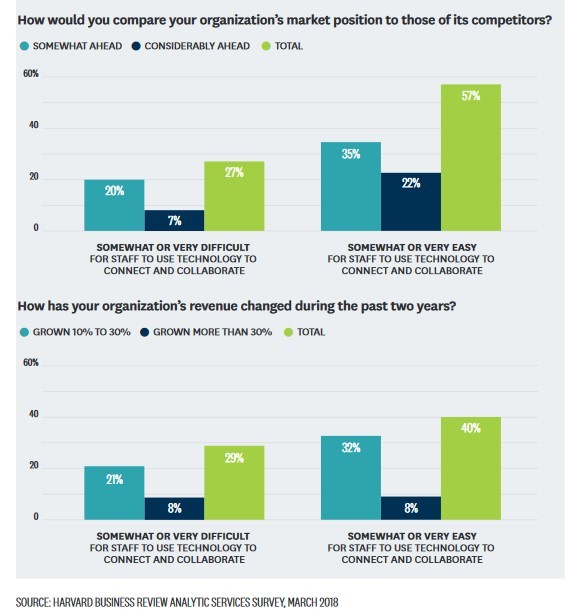 Figure 3: 57% of highly connected companies consider themselves in a favorable market position, compared to 27% of poorly connected companies. And 40% of highly connected companies grew their revenue more than 10% over the past two years, compared to only 29% of poorly connected companies.
5. IT leaders see the link between technology and working smarter.
Finally, and not surprisingly, findings reflect a strong correlation between workplace technology, productivity and collaboration.
- 9 in 10 survey respondents say their end-user computing systems and technology have resulted in productivity improvements within the company.
- More than half say their technology has helped facilitate this improvement to a great extent.
- Those who perceive their technology investments to be worthwhile also say workplace technology has enabled high levels of collaboration.
Software company SAP America Inc., for example, realized huge productivity gains after introducing Apple iPad and iOS to its teams. The new tools give workers centralized access to business data, pulling directly from business systems, and the results have been empowering.
When end users don’t need to wait for specialists to pull reporting, and everyone’s looking at the same data, collaboration happens around a single source of truth — and things get done faster.
Michael Golz, chief information officer for SAP Americas, reflects on the impact: “Giving people direct access to the data in your core systems, and to responsive applications that allow people to do analytics right on the front end, really changes the way people interact with analytics, how they find the answers to the questions that they have, and their ability to collaborate. It’s had a massive impact on productivity and accountability. It’s taken lag time and latency out of our business processes.”
Reaching the summit: What’s next?
The Harvard Business Review report in its entirety captures valuable anecdotes and use cases from IT leaders, where companies are planning to invest in the future and tactical recommendations for creating a more connected workforce.
We love a good success story. Seeing our clients win drives everything we do at Insight. Here are some of our favorite case studies.
Today’s employees need to feel their organization is at the forefront of workplace tech innovation. But at the end of the day, the workforce needs to work — and that’s where the tools shine.
Whether you’re a small business or a tech giant like Cisco, technology will continue to be the great equalizer that leaves us either striving for something more at our workplaces or thriving with better, more productive experiences.