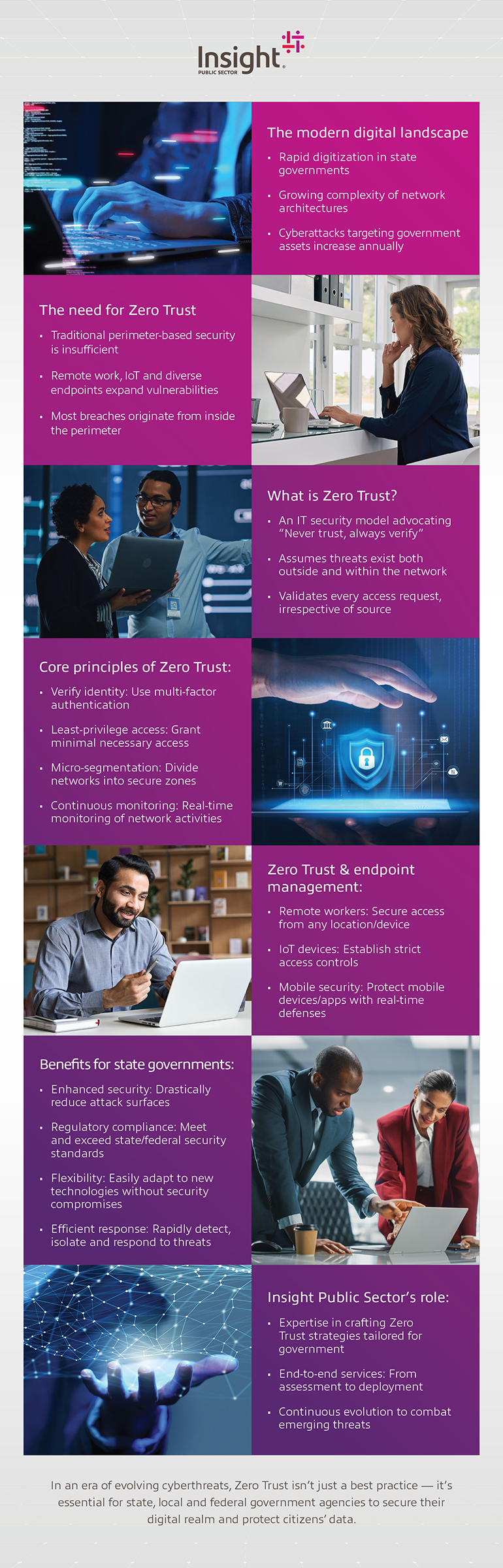
Infographic text included for screen readers:
The modern digital landscape
- Rapid digitization in state governments
- Growing complexity of network architectures
- Cyberattacks targeting government assets increase annually
The need for Zero Trust
- Traditional perimeter-based security is insufficient
- Remote work, IoT and diverse endpoints expand vulnerabilities
- Most breaches originate from inside the perimeter
What is Zero Trust?
- An IT security model advocating “Never trust, always verify”
- Assumes threats exist both outside and within the network
- Validates every access request, irrespective of source
Core principles of Zero Trust:
- Verify identity: Use multi-factor authentication
- Least-privilege access: Grant minimal necessary access
- Micro-segmentation: Divide networks into secure zones
- Continuous monitoring: Real-time monitoring of network activities
Zero Trust & endpoint management:
- Remote workers: Secure access from any location/device
- IoT devices: Establish strict access controls
- Mobile security: Protect mobile devices/apps with real-time defenses
Benefits for state governments:
- Enhanced security: Drastically reduce attack surfaces
- Regulatory compliance: Meet and exceed state/federal security standards
- Flexibility: Easily adapt to new technologies without security compromises
- Efficient response: Rapidly detect, isolate and respond to threats
Insight Public Sector’s role:
- Expertise in crafting Zero Trust strategies tailored for government
- End-to-end services: From assessment to deployment
- Continuous evolution to combat emerging threats
In an era of evolving cyberthreats, Zero Trust isn’t just a best practice — it’s essential for state, local and federal government agencies to secure their digital realm and protect citizens’ data.
Plan your Zero Trust strategy today. Craft tomorrow’s government security today with Insight Public Sector.