Subscribe Stay Updated with Insight On
Subscribe to our podcast today to get automatic notifications for new episodes. You can find Insight On on Amazon Music, Apple Podcasts, Spotify and YouTube.
By Insight Editor / 25 Nov 2025 / Topics: Artificial Intelligence (AI) , Microsoft 365 Copilot
This special bonus episode of Insight On comes straight from Microsoft Ignite in San Francisco. We took Insight On on the road — and into the Insight booth — to capture the latest and greatest as the week-long annual conference unfolded.
First up, Insight CMO Hilary Kerner sits down with Alysa Taylor, Microsoft CMO for Commercial Cloud & AI, to understand the emerging concept of Frontier Firms — organizations embedding AI into the core of their operations — and why they’re seeing three times greater ROI than those still experimenting. They discuss the democratization of AI development, governance challenges, and the critical role of partners in enabling secure, scalable adoption.
Then, Insight Agentic Field CTO Parker Johnston joins us in the booth to break down the latest announcements from Ignite, including Agent 365 and Microsoft Foundry updates. He explains why security, governance, and observability need to start on day one — and why failure isn’t a setback but part of the process.
If you liked this episode, share it with a colleague.
Have a topic you’d like us to discuss or question you want answered? Drop us a line at jillian.viner@insight.com
— Parker Johnston, Agentic Field AI CTO, Insight
Audio transcript:
Parker Johnson:
I think the biggest thing I'm like tired of maybe explaining or continually having to re-explain is this whole concept of like, we're going to fail the MIT report, that everyone brings up 95% failure rates. All of these concerns around the Forbes articles, CIO dive articles around projects getting shelved. That's actually meant to happen. And I think people need to understand projects should be shelved at certain phases as you go from ideation through proof of concept, minimal viable product, proof of value, and then to production. It should be reevaluated as we go and continually understood, yes, we need to keep putting money into this or it's an opportunity for us to say this isn't the right time for us to continue this exercise in this effort. Let's shelve it. Maybe come back to it as technology allows. I think people view it as failure's a bad thing, but it's actually meant to fail. That's what the processes are there for and how success is typically driven.
Jillian Viner:
Welcome to this bonus episode of Insight on our Crew is here, live at Microsoft Ignite in San Francisco. We've been doing interviews with leaders from Insight, Microsoft, some partners, even a few clients have dropped by. We're getting such great insight about all the new tools and options coming out of Microsoft and talking realistically about what are the challenges that, you know, leaders are still having with ai. What are they excited about? How do you separate the hype from the how so, so much great content that we cannot wait to package and bring to you. But we did have two conversations that we just couldn't hold onto any longer. So that's why we're dropping this special bonus episode. So first we're gonna take you into a conversation between insights Chief Marketing Officer Hillary Kerner with Alyssa Taylor, the Chief marketing Officer for Commercial Cloud and AI at Microsoft.
Jillian:
They're gonna help unpack this new emerging term called Frontier Firm to help us understand what that means. Is it noise? It is, is it a signal? Is it a true North Star? Then we're gonna kick it over to Parker Johnson. He is our field agentic, AI CTO for insight. It's gonna give us a great recap of what's come out of in of Microsoft from day one and day two, what he's really excited about and what signals that leaders at businesses need to pay attention to. So we hope you enjoy, we'll see what our regular schedule next week.
Hilary Kerner:
Alyssa, I'm so excited to have you on Insight On Insight. Oh,
Alyssa Taylor:
I'm very excited to be here. Thank you for having me.
Hilary:
Welcome. Why don't you introduce yourself to our listeners.
Alyssa:
So I am the Chief Marketing Officer for the Commercial Cloud and AI division at Microsoft.
Hilary:
Excellent. And are you enjoying Ignite this year?
Alyssa:
Loving it. It's so fun. My team puts on the event. So this has been a year in the making. We started planning December last year, so it's fantastic to see it come to life.
Hilary:
Um, a lot of exciting announcements this morning. Yes. During the keynote. Um, it was very cool to see the availability of Anthropic. Now
Alyssa:
I know we're so excited to have Anthropic as part of Microsoft Foundry and we are now the first cloud provider, an AI provider that has two frontier models, so both OpenAI and Anthropic coming to join the 11,000 models that we have across Microsoft Foundry. So we're incredibly excited about the announcement this morning.
Hilary:
One of the terms that I've been hearing a lot, uh, including at the keynote this morning is this idea of a frontier firm. Yes. Can you tell me a little bit more about that and why does that matter?
Alyssa:
Yeah, so when we talk about a Frontier firm, it's really about organizations that are adopting AI but really embedding it into the fabric of how they work and how they operate. And I think that's what's different than using AI and being a frontier firm is really transforming your day-to-day operations. How your employees interact with the systems that they use every day and really shaping different lines of business as well.
Hilary:
We talked to a lot of leaders, as you might imagine, and AI seems to be both ubiquitous and yet companies are struggling to get value from it. Yes. So when um, you recently published a study of Frontier firms Yes. And looked at patterns that led to success. What are some of the things that stood out to you? Well,
Alyssa:
It was interesting because we wanted to learn how, like what does a frontier organization look like and what are they doing? And so we worked with IDC and we surveyed several thousand organizations to just learn like what does a Frontier firm look like and what value are they getting? What does it m to not only be Frontier, but then also is it helping them as an organization? And the most interesting thing was is that those that were frontier by the, you know, the definition of being able to embed AI into their work, how they operate, they actually saw, uh, three x greater return than those that were either just piloting or experimenting with it. And so it was really nice concrete evidence of how there can actually be real return on ai. 'cause to your point, there's lots of questions of is this a fleeting thing? Does it really make that big of a difference? And what you're seeing is actual fundamental change and return on the investments that organizations are making at a three x rate.
Hilary:
One of the things that really stood out to me in that study was you're finding that 58% of frontier firms are using custom ai. Yeah. And that within two years, 77% plan to Yes. And it aligns with what I hear when I talk to leaders. A lot of them are struggling to get value with something directly off the shelf. It's gotta connect in with their business processes
Alyssa:
A hundred percent. And a lot of what you saw today in the keynote was us talking about ubiquitous innovation and that is kind of all of us as makers because the reality is is that AI is only as good as the workflow or the business process or the outcome that you are designing for for an organization. And so being able to have so many people have access to be able to customize and extend and really create agents and AI solutions that are very unique to the opportunity or the problem that they're trying to solve. And so it's a big part of our strategy is AI and the flow of work, but then also having this innovation so that all of us can become makers and all of us can use AI in our day-to-day work.
Hilary:
So we do a lot of work together. Yeah. Insight and Microsoft, do you have any good examples you wanna share? Well,
Alyssa:
I think we just do so many things for our mutual customers and one of the things that I love about Insight is you've talked about like you can't go at this alone, right? Like this is a journey. And it's so true because being able to take an organization, help them understand their data, their AI is only as good as their data, and then have insight, knows your customers and the outcomes that they're trying to drive, the verticals in which they operate, and being able to really sort of by the depth of the, the uh, knowledge that you have of the customers really work side by side with our mutual customers on helping them get those outcomes. And that return that we've talked about,
Hilary:
I'd love to hear your thoughts on, um, how is the ai, how is AI changing the ecosystem? So the role of partners as you pointed out, I think is becoming really, really important. What do you see as the future for partners in this space? I think
Alyssa:
There's a couple things. One is data, as I mentioned. Um, because again, your AI solution and those custom solutions are only as good as the data that it's accessing. And so really helping organizations have a data strategy I think is really important. I think the second thing that is happening in the ecosystem is normally you, there were, you know, more, there were more apps needed than there were developers and now it's AI's really democratizing the ability to build agents, to build AI solutions. But you have to do it with governance and observability. And I think that's really where Insight comes in and can help organizations, you know, unleash the maker in all of us, but then help organizations actually have the ability, the, the control plane to be able to observe all of the agents and all of the AI solutions, govern them, secure them.
Alyssa:
That's really, really important. And I think that's never been more critical for the ecosystem to really be able to help organizations with that observability, governance and security layer. And then the last thing is skilling, right? So many, this is all new and like it's even even us as marketers, right? It's changing how like if we think about the creative process and we think about the generation of MPFs and getting assets in the hands of our customers, that's all changing and it can be very overwhelming and intimidating to people. And so I just think that skilling and helping not only show what's possible but then helping to skill organizations, that's a new thing that I think our ecosystem has to sort of incorporate into the outcomes that they're driving for customers.
Hilary:
I agree completely frequently our, the leaders that we talk to will cite skills within their own organization as the single biggest barrier to adoption, especially widespread adoption, right?
Alyssa:
Yes. So yeah, that notion of upskilling is really, really important.
Hilary:
Excellent. So what are you most looking forward to this week?
Alyssa:
Well, I think we just got such an incredible lineup. So obviously with the keynote today where the partner keynote is happening right now, now and then there's all these hands-on experiences. So back to skilling, we've got labs certifications, we've got community sessions, theater sessions, industry specific technology. So we've really sort of embraced kind of every facet of if you're a developer, an IT pro, a business leader, having that both hands-on experience, being able to actually, you know, put hands-on keyboard and touch the technology. Um, but also the networking and the community. And I think we've got some great things here in the hub. It's buzzing and getting, you know, for people to connect and just share because that's the other thing that particularly now it's so important for people to be able to share their stories of how they're using AI and how they're getting value from it.
Alyssa:
And we, um, one of the greatest things is in healthcare. We look at healthcare and what AI is doing for physicians and we have a technology called Dragon copilot. Dragon copilot can actually, uh, with it's the assistant to a physician and it can actually, with ambient and generative ai, it can actually record with consent, a interaction with a physician and a patient and then be able to analyze that across future and past uh, medical records, be able to then generate a clinical note and then integrate that clinical note into the electronic medical record. And so there are doctors that talk about how that's given them that pajama type 'cause that's when they would do their clinical notes . And it's really changed not only doctors' lives and right now in the US doctors are at a critical level of burnout. So it's changing their lives, but it's also improving patient care. And so it's that kind of stories that when you can share in this environment and at Ignite that not only spark inspiration, but they're also how industries are changing and how AI is actually really impacting those industries.
Hilary:
I think sharing those outcomes with, you know, peers or calling is so important because a lot of people don't know where to start. Yes. Or they don't know the first use case to be, that will be the most meaningful to get started with,
Alyssa:
So. Right. And that's right to your point, like this here is not only about experience in the technology, but it's about sharing those stories and being able to connect and the community. Awesome.
Hilary:
Thank you so much for being here and thank you for the partnership. Um, we love that we're able to bring Microsoft Tech to our clients and make it available to them. So appreciate your
Alyssa:
Partnership. Very, very much appreciate the partnership. Thank you for everything that you do.
Jillian:
We are on day two of Ignite. A lot of new exciting announcements happened yesterday. It actually, it felt like we woke up and heard a lot of exciting changes. Yep. What caught your attention the most?
Parker:
Uh, I think the biggest one obviously was the announcement that came out even before the keynote with Claude. Coming into AI Foundry was a huge success point. I think that kind of says all right, we're now fully invested across the gamut of opportunity to help clients be better met where they need to be. Uh, Claude does a great job from a coding perspective. So now we can maybe push the envelope with agents from there. Uh, and I should say it's, what is it? Agents 365 is also a really big build out actually giving that agent a persona and welcoming them into your organization. Not having shadow it, trying to run it off someone's laptop, do something that maybe doesn't really justify the need, but now they're a part of the team moving from that frontier early firm more to that phase two kind of organization from there.
Jillian:
Okay. So you tipped on a lot of sort of descriptions that fit some buzzwords that we're hearing about frontier firms hybrid firms where agentic agents are really part of your team. So you've got AI plus a AI agents as teammates. So what do organizations really need to pay attention to right now? Like why is that so critical? This this new announcement of the the the agent piece specifically? Yeah.
Parker:
Agent 365, I think it's really important now if you think through what firms need to start to understand is security. It's kind of, everything's now becoming, how do we maybe exploit agents? They're out there running wild, we don't know who's deployed them, we don't know where in the organization they're deployed, we don't know what they're doing. So how do we start to understand who they are, what they're acting to choose to do and where they're deployed and what they have access to in an organization. So the security control plane obviously built on top of some of that information was also kind of peeling back that onion and saying, Hey, we can now see what you're choosing to do as an organization or where these agents are acting. But it's also making us much more comfortable and confident that it's acting accordingly to what we're asking it to do at the right time.
Jillian:
So it's kinda like everyone's gone off and hired, hired , a bunch of invisible employees that nobody has visibility to. Yep. So now we can find out whether or not they're acting and behaving the way that they should. We know that we don't have two quote unquote employees doing the same tasks. You've got that visibility plane is what you're saying.
Parker:
Yep. Yeah, I think it's getting back to that, I think doing the same task is really let's get into one standardized operating process. Yeah. Or one standardized operating model and let's not spend the time, energy, effort and money to maybe build an agent that already exists. We already have one, let's deploy it, let's invite it to that team's conversation. The other thing that I'm most excited about by them having a domain or like a name within our entre tenant is I can maybe invite it to teams and then take that transcription and use that agent to AutoFarm out opportunities to put information on an executive's task list or a teammate's task list that they're gonna try to get done without ever having to bring it up to their knowledge. We can just kind of farm those out, ally in the background, have it appear for them on their to-do and have them take action on that one without any requirement of the teammate to act.
Jillian:
What are you trying, what are you tired of explaining or where do you find that leaders are missing about the agentic story?
Parker:
Uh, I think the biggest thing I'm like tired of maybe explaining or continually having to re-explain is this whole concept of like we're going to fail the MIT report that everyone brings up 95% failure rates. All of these concerns around the Forbes articles, CIO dive articles around projects getting shelved. That's actually meant to happen. And I think people need to understand projects should be shelved at certain phases as you go from ideation through proof of concept, minimal viable product, proof of value, and then to production. It should be reevaluated as we go and continually understood, yes, we need to keep putting money into this or it's an opportunity for us to say this isn't the right time for us to continue this exercise and this effort. Let's shelve it and maybe come back to it as technology allows. I think people view it as failure's a bad thing, but it's actually meant to fail. That's what the processes are there for and how success is typically driven.
Jillian:
I love that. Giving permission to fail. Yep. 'cause you're learning from that. Talked about the co-pilot integration with all of Microsoft products. How does this really change the future of the workforce?
Parker:
Uh, I think it actually allows people to take a step forward in their journey and maybe realize that it's not a job replacement. Nothing here that we've learned about today from a co-pilot standpoint is to really dig in and say, oh, that's a replacement for a sales team. Or that's a replacement for maybe a business analyst. It's actually there to empower them to do more, have a better quality of work, better quality of life while they're at work and maybe leave at the end of the day without ad nauseum email still piling up. But it's really just meeting those teammates where they are. I'm not good at Excel formulas but now I can do equals co-pilot and have a great opportunity to get something pulled in automatically for me from a maybe VLOOKUP or something like that that no one remembers but they still have to Google. So,
Jillian:
So for, for those folks that took all that time to learn Excel like sorry
Parker:
World Excel championships are now over. So
Jillian:
, uh, it is a bit of a relief 'cause I'm sure like any organization, once someone knows you're good at Excel, you become the go-to for everything and now everybody has that at their fingertips, which is quite liberating.
Parker:
Like SharePoint, it ends up on your resume. You are the SharePoint guy, right. For the rest of your career. .
Jillian:
That's right. Now we're gonna level up everybody. Everyone's gonna be talking about the copilot agents, the integrations, even the foundations. What is a takeaway that you've captured so far that people like there's actually not enough hype or buzz about?
Parker:
I think the big thing in looking through that a lot of the hype should be around is the security aspect. I think if you're thinking through taking that black box of what does this model do, what are the actions we're choosing to take and maybe making that more opaque for people or maybe more exposed for people to understand and saying, Hey, it's a black box. We put a lot of data into it. We're getting some data out, but what's the explainability and what can we audit throughout that workflow to make the CISOs of the world a little bit more comfortable and us continuing to push the envelope from Angen standpoint. I know that's maybe more focused towards Foundry than it is to copilot, but it's also something that's very beneficial across the org to start to think about day one instead of at the end of production deployment.
Jillian:
Let's talk about day one a little bit in a different complex context. Organizations, if they haven't deployed copilot or a a AI so far, this more than anything should convince them this is the time I feel like copilot, like Microsoft is doing a really great job of their messaging right now and it feels so easy and intuitive and because it's integrated in everything, it kind of begs the question of like, why not just go to Microsoft directly, get copilot copilot licenses to my whole team and then we can just go and do all these things? Like what is the misconception there or what do people kind of underestimate as the biggest challenge of just unleashing copilot licenses?
Parker:
Uh, I think the biggest thing there is actually the human element. There's still a lot of change management. We've worked with firms that are banks. We've worked with firms that are a lot of different size, scope and scale. And the number one thing is, oh we've always done it this way so I'm just gonna pick up the phone, call the help desk. Well what if we could use an agent to do that instead? But it's getting them to understand that that benefit and that value, it's the give get scenario of we're gonna give you this great tool, here's what you're gonna get in return right now. I think that's really where, yeah, you can buy the co-pilot license but to make sure you're getting the largest ROI or the return on what you're choosing to take on as an organization from an AI standpoint is let's spend the time find a great partner like Insight to go and help lead that OCM strategy of change management internally and drive that adoption forward.
Jillian:
What about data? What about the infrastructure?
Parker:
Yeah, that's often overlooked. I think, oh our data's super clean. Our data's where it needs to be. We start to work with them on a daily basis and realize there's some help that's needed. I think there's some big announcements still to come at Ignite around fabric integrations and opportunities to kind of get everything moving into that direction. But taking that step back and saying, what are we actually trying to deliver with whatever it might be. If it's ai, if it's copilot, if it's something different, how do we bring all of these capabilities, transform our data plane and really focus on, it's not a large uplift for the next app, it's just sliding in another data source and feeding it up into our agent from there.
Jillian:
I'm pick your brain for a moment. 'cause you've been working our booth since day one. You've been talking to a lot of people coming in and out showing them some demos. What have you heard as sort of like the, the biggest misconceptions or aha moments? Um, or, or just kind of give us like a state of the reality of where business leaders are right now with their AI adoption? I think
Parker:
It just continues to show that everyone's in a different place. Yeah, we're having countless conversations. I was here for eight hours yesterday helping out and it became, we don't have adoption of copilot, we're terrified of transcription. How do we get over that hump internally all the way down to how do we push our delivery team to do more and to do better? And that's where some of the demos we have here around agent delivery, agent SDLC are really coming to into fold saying, Hey, we're able to meet you really where you are on this journey. But I think it's trying to understand that the, the no code co-pilots of the world are still out there. We're trying to get people moving along to be that first step of a frontier firm low code. Let's empower those bas let's empower those internal individuals to use English as a programming language against our data. That's the next phase. We're obviously seeing as people are more comfortable and confident. And then how do we adopt complete universal overhaul of our organization and really empower step one of migrate and modernize into the hyperscaler into an opportunity use foundry and then drive value and a continued ROI, uh, from there
Jillian:
Microsoft did a pretty impressive demo at their keynote of like different teams and different functions using copilot to do what would normally take, you know, tons of time to do specific tasks. What's the reality from your perspective? Like how, how far away are we from from that sort of reality
Parker:
Pulling together that Ava t-shirt example I think was a really unique situation to say, here's what you do see on a daily basis. That off also takes a lot of time to set up and configure and to understand like, this is what our organization's trying to do. Mm-hmm . If you spend the time upfront, you automate as best as possible. The next one is free because you already have the automation in place. I think that's where a lot of teammates are saying, Hey, I'm fearful because it's gonna take me an hour to get that flow that we saw yesterday completed. I have to automate it the first time. It's gonna take me forever. But how many times are we getting t-shirt examples? How many times are we getting orders that are the same thing over and over? Is that one hour worth it to the next one be six minutes like we saw in that demo as to where we are close to that. I think if you build agents accordingly with the proper prompts, which all of this goes back to data and prompting mm-hmm . You're gonna be in the same, same spot pretty quickly as an organization to get to that point. Now
Jillian:
Again, you're helping, you're talking to clients every day, you're talking to business leaders, you're figuring out those use cases in that demo for Microsoft actually they had a couple different demos where people would share like, oh it took me an hour to set up this workflow. Is that a realistic expectation to set out there? Like it does take time to figure out what is the use case? Is this worth, you know, investing the time to set something up? What would be your advice to not even just leaders but just, you know, active users of these, of these tools?
Parker:
Yeah, I think it goes back to a slide that I love. There's a, there's a like a Gartner picture out there. It has eight key elements that are on it. It's how do you go through and tell the give get story? How do you evaluate where your data is? How do you buy, get the buy-in from stakeholders in your organization? How do we find measurable KPIs, which is typically where everything falls apart. Oh, we don't know how to measure it and then it's like gonna get shelved 'cause no one knows what's going on. Hmm. But spending that time in that hour and finding those KPIs and building something that's gonna make sure they hold true is gonna be such a mostly up for success there. And I think taking even a step back from that is how do you identify all the use cases? Every organization has 'em, you have five ideas, teammates have 10 ideas. Getting them into a single control plane, much like we offer with Prism is a great way to go about bringing that all together and say, Hey, here's all of the open form opportunities we have in our organization and here's how we're electing to take them one by one, a single bite of an apple at a time to bring a larger good to the organization from there.
Jillian:
Yeah. You mentioned Insight Prism for our listeners, that is a brand new service offering that Insight just launched. Uh, we'll put some information on the show notes to go check that out. Okay. So what's one, another big takeaway that you've gotten from this so far? Maybe let's go back to that Foundry announcement. Like why is that so important and what are people maybe not getting right away from that headline?
Parker:
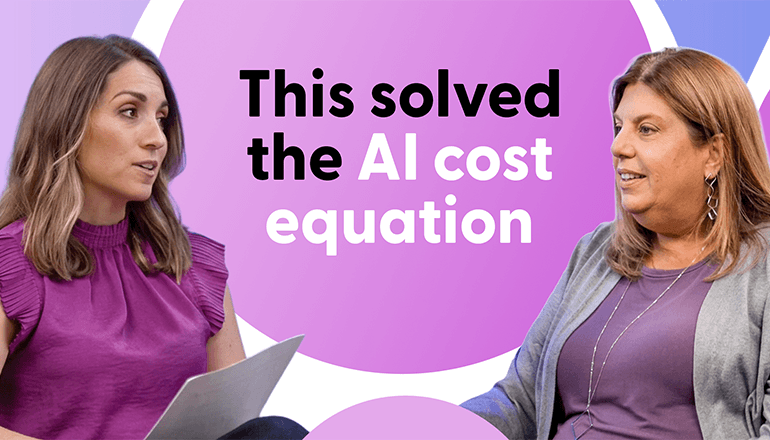
The biggest one people aren't putting value on is Model Router. So that was brought up in a lot of the keynote and the conversation around it from that perspective is the number one thing I hear while I'm out traveling day to day is cost. Oh, these tokens are gonna start to cost me a lot of money. I'm very concerned what's gonna happen with that one. Well, typically what happens is a teammate just logs in to Foundry, GPT five, full tokens full bore, but that's not the model they need. They need a smaller mini model. They showed it on stage of how do you bring together the best in breed models now that they have with Claude and everyone else to be routed to the proper endpoint that's gonna save you tokens. 50% improvement on response time, 60% improvement on cost savings and get you to where you need to be at little to no effort of your team.
Parker:
It's now one end point that you're hitting and it's choosing for you in the backend where to end up. Then to go with that, that cost management, the cost savings in the Microsoft Book of News that came out, there's a small line in there that says Foundry Local, great opportunity to pull down models without a subscription, without a requirement. Do localized development. So your dev team is not sending back and forth a lot of information. Again, raising that cost. We can get close to model of choice on a laptop and then move through our production flow from there to get much closer to accurate, uh, result sets as we move through testing and prod. Parker,
Jillian:
Thank you so much for taking the time. It was really nice to chat with you. We hope you enjoyed this bonus episode of Insight on from Microsoft Ignite. We'll be back next Wednesday to our regular cadence and we cannot wait to share with you even more of the insight we've captured this week. Everything from the technical to the business strategy. We've had conversations with business leaders, Microsoft execs partners, and of course from Insight. See you then
Speaker 5:
Discover more@insight.com. The views and opinions expressed in this podcast are of those of the host and the guests, and do not necessarily reflect on the official policy or position of insight or its affiliates. This content is for informational purposes only, should not be considered as professional or legal advice.

Agentic Field CTO, Insight
Parker is an agentic field CTO within Insight's Microsoft solutions business line and an AI strategist who helps organizations design, implement, and scale enterprise technology solutions. During his 15-year career, he has led initiatives focused on enterprise modernizations, cloud uplifts, AI-driven transformations, and reimagination of critical systems. In his current role, Parker drives go-to-market strategies for technology solutions with an emphasis on AI, helping clients modernize legacy systems, automate software delivery, and realize measurable value. He works to ensure organizations are empowered to pursue transformation and growth without being limited by technology, providing a solid plan, trusted guidance, and an evolving roadmap that balances business priorities with technological advances.

Marketing Manager, Insight
As marketing manager for the Insight brand campaign, Jillian is a versatile content creator and brand champion at her core. Developing both the strategy and the messaging, Jillian leans on 10 years of marketing experience to build brand awareness and affinity, and to position Insight as a true thought leader in the industry.

CMO, Commercial Cloud & AI, Microsoft

Chief Marketing Officer, Insight
Hilary Kerner joined Insight as Chief Marketing Officer in January 2024, leading a global team of over 300 marketers to position Insight as a premier Solutions Integrator. With extensive experience in technology marketing, she is dedicated to fostering an inclusive culture and driving growth through innovative strategies and digital transformation.
Subscribe to our podcast today to get automatic notifications for new episodes. You can find Insight On on Amazon Music, Apple Podcasts, Spotify and YouTube.