Tech Journal
Think Twice Before You Modernize
Storage With Cloud
By Phil Mogavero / 18 Sep 2019 / Topics: Cloud , Storage
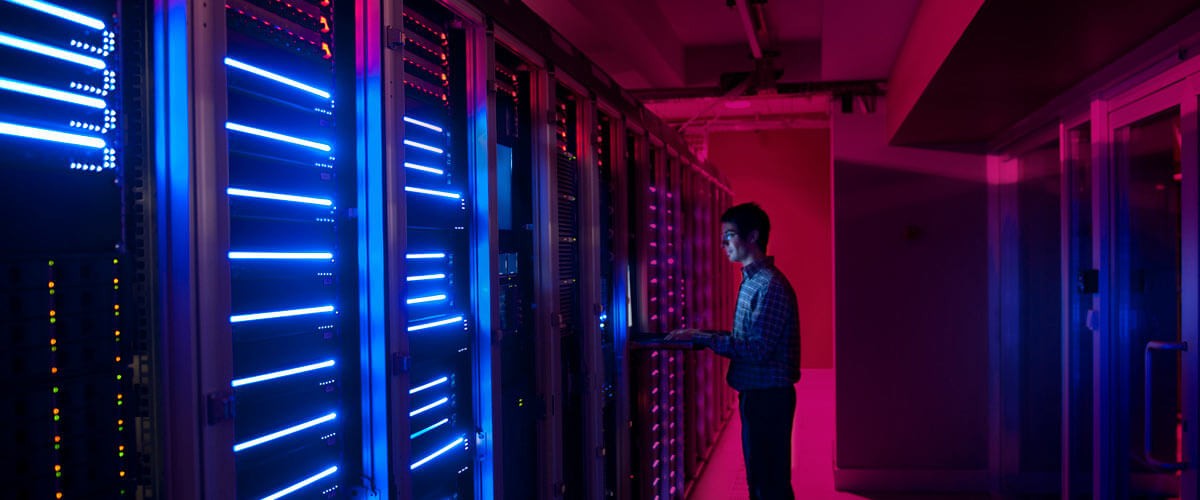
Seeking cost-efficiency, agility, and simplicity? HCI and Flash solutions are a better bet than cloud-first.
Many businesses are looking to break free from yesterday’s on-premises storage solutions and embrace a cloud-first mentality. It’s no wonder why: legacy storage hardware has increasingly become a burden to manage, can be difficult to upgrade and in many cases is unable to keep up with growing workload demands.
While the decision to modernize your storage environment is a shrewd one, the idea of going cloud-first requires deeper thought.
A number of businesses have made cloud-first their standard, simply because they could.
In recent years, a number of businesses have made cloud-first their standard, simply because they could – and not because they deemed the workload an especially good fit for the cloud. Consequently, many of these businesses have experienced pitfalls that limit – or altogether negate – the benefits they were hoping to realize from migration.
The challenges of running apps and data in the cloud
- Excessive costs: While cloud is generally viewed as a way to save costs, many experience the opposite. The combination of virtually unlimited scale and extensive automation encourage customers to store unprecedented amounts of enterprise data in the cloud. These capabilities, however, make it easy to lose track of how much data you’re storing, leading to sticker shock when the first bill arrives. Ingress/egress fees and the use of hot storage when cold would be acceptable also add to these costs.
- Provider lock-in: Public cloud providers don’t deliver on-premises replication for data stored on the cloud, meaning the data is locked into the cloud environment. This forces customers to leverage third-party ISVs to replicate data to their physical environments, which is needed to run a consistent hybrid cloud or repatriate data on-premises.
- Poor data visibility: Once data resides on the cloud, native public cloud tools often fail to deliver the visibility that IT professionals expect. According to a 2019 study conducted by Dimensional Research, less than 20% of respondents reported that they had the data needed to properly monitor their public cloud environment (compared to 82% who had the proper resources on-premises).
- Performance: Because cloud provider data centers are located around the world, customers are forced to pull the results of the queries they run across massive geographic distances. This results in significant latency, which can limit the overall performance of their applications. Furthermore, cloud providers tend to leverage commodity hardware that doesn’t provide the performance applications need.
Taking a more thoughtful approach to storage modernization
Businesses should take a more thoughtful approach to storage modernization. Rather than committing all applications and data to the cloud regardless of their fit, customers should assess which applications are good candidates. Those looking to achieve lower costs, greater agility or less complexity can leverage a combination of physical and virtual technologies from established storage leaders, such as HPE, Dell EMC and NetApp, to best complement their workloads:
- Solid state arrays (SSA, also referred to as “all-flash”) for apps in need of the highest levels of performance, like data analytics, database infrastructure and AI/ML.
- Hyperconverged infrastructure (HCI) to run your traditional on-premises workloads, such as file service.
- Public cloud storage to support less critical use cases, like backup and application development environments.
Let’s dive deeper into the advantages of using SSA and HCI to support your critical applications and explore some of the best offerings in market.
Selecting the right all-flash array
SSAs contain multiple flash memory drives to deliver high performance and guaranteed low latency for your compute-intensive workloads. Unlike yesterday’s hard disk drive-powered storage offerings, today’s all-flash offerings have no moving parts. This means they run cooler, reducing the risk of overheating and saving you on energy costs. Three SSAs worth your consideration are HPE Primera, Dell EMC Unity and NetApp C190.
HPE Primera
According to IDC, HPE Primera combines “the simplicity of Nimble Storage, the mission-critical heritage of 3PAR and the intelligence of InfoSight.” The result is an enterprise-grade storage solution that provides, among other capabilities:
- A scale-out architecture to support massive parallelism
- Cloud-like provisioning capabilities, including 5-minute upgrade and 20-minute install times
- AI/ML-driven, self-optimized systems management
Dell EMC Unity
Dell EMC Unity is an all-flash array that can scale to 150TB and starts at under $18K. This solution is simple to rack and stack because it comes in an integrated 2U design with full block and file storage. This design significantly reduces cabling and power needs. Unity is designed for virtualization, offering tight VMware, Microsoft and OpenStack integrations for enterprise and transactional NAS, SAN and VMware deployments. Additionally, it supports no-cost plug-ins for VMware and Microsoft virtualization admins. Further advantages include:
- Managed and supported with a simple, web-based interface and built-in help desk
- Flexible deployments via snapshot mobility, thin clones and AWS AppSync application-aware integration
- Ability to deploy Unity as a virtual appliance
NetApp C190
NetApp C190 is a new all-flash solution that can connect directly to the public cloud and starts below $20K. By leveraging NetApp ONTAP software, you get enterprise-class data services, hybrid cloud support, and data reduction capabilities. This offering gives customers:
- The ability to provision VMware, Oracle and Microsoft SQL Server instances in minutes
- Automatic backups to your public cloud provider
- Data protection with built-in encryption and synchronous replication
Exploring the HCI market
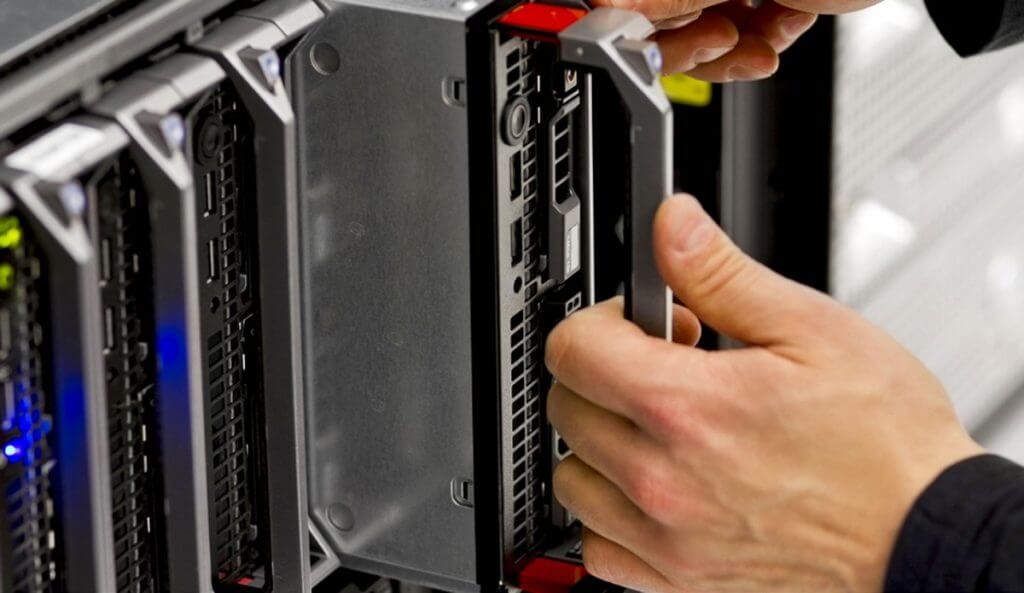
HCI consolidates compute, storage, memory and virtualization into a single appliance, making it easier to manage these resources and how they support your applications. HCI solutions offer several advantages: they enable simplistic replication between your onpremises and cloud environments, they’re easy to manage and scale out like building blocks and they provide lower total cost of ownership than legacy solutions. Offerings that stand out in the market are Dell VxRail and HPE SimpliVity 380 with Nutanix.
Dell EMC VxRail
Dell EMC VxRail is a great solution for customers looking to modernize their data center or implement a hybrid cloud. That’s because VxRail is pre-integrated with VMware vSAN, giving you a foundation to run on VMware Cloud. This means it is 100% manageable by VMware vCenter, helping you to dramatically simplify IT operations and your path to hybrid cloud implementation. Additional advantages include:
- Automated end-to-end lifecycle management
- Quick and easy installation with automated network setup via SmartFabric Services
- The ability to easily scale performance and capacity to match your workload’s demands
HPE SimliVity 380 with Nutanix
In April 2019, HPE and Nutanix announced a global partnership to deliver Nutanix Enterprise Cloud software on HPE hardware. This partnership entails the combined offering of managed hybrid cloud infrastructure, residing in customer data centers. One of these offerings is HPE SimpliVity 380 with Nutanix. This appliance gives you:
- The ability to control data across multiple sites with a rich set of data management functions
- Reduced storage overhead with always-on, global deduplication and compression
- Comprehensive data protection from backup/recovery capabilities and clones for disaster recovery (DR)
Modernizing your storage environment with Insight
This article provides a good overview of the technologies and providers you should consider when modernizing storage. However, to ensure smooth deployment and on-going management, it can be helpful to leverage a storage consultant, like Insight. Our team provides a number of services that streamline your modernization efforts:
- Assessment: Insight will assess your existing environment to help you understand what kinds of data you store and determine the optimal blend of storage resources. During this phase, Insight can also help you identify redundant, obsolete, or trivial data – which can add up to as much as 70% of your footprint – to right-size capacity and reduce costs.
- Purchasing power: As part of a $9B organization, Insight can provide a level of purchasing power that allows us to pass economies of scale onto the customer.
- Installation expertise: Our team has the highest-level of certifications offered by Dell EMC, HPE and NetApp (which represent 46% of the storage market). We also have expertise in data migration, data center consolidation and complementary competencies like Microsoft, data analytics and security. This streamlines your setup, so you can more quickly derive value from your storage environment.
- Managed services: Once you have your storage environment installed, Insight can provide 24x7x365 monitoring and support to help you effectively manage your new hybrid environment.
Confidently make your next move.
An IT assessment with our experienced team will give you deep understanding and a clear path forward.
Schedule an assessment
About the Author:

Phil Mogavero
Vice President of Hybrid Data Center
Mr. Mogavero serves as Vice President of the Hybrid Data Center Practice at Insight. He is responsible for the vision, strategy and execution in order to grow the revenue and associated Insight Services for Insight strategic Hybrid Data Center Partners; including Cisco, HPE, Dell/EMC, VMWare, NetApp, Veritas, Veeam, Citrix and others. Mr. Mogavero has direct management for marketing, presales, delivery, certifications, customer success and vendor operations. Mr. Mogavero works closely with the sales organization and other practice leaders to develop synergy, increase customer value and drive overall Insight success.
Special thanks for his contribution:

Victor Kruse
Data Center Solution Architect
Victor Kruse is a Data Center Solution Architect with over 20 years of experience in the Industry. Currently at Insight, Victor supports best-in-class solutions involving; On and Off Prem Cloud, Virtualization, Standardization, Orchestration, Automation, and Recovery.
Related articles



Narrow your topic:

About Tech Journal
Tech Journal is a free, quarterly digital magazine written by IT pros, for IT pros. It incorporates thought leadership on a range of topics, including supply chain optimization, workplace collaboration, cloud and data center transformation, and digital innovation. Dive into the trends and solutions shaping today’s IT and business landscape and hear best practices firsthand from the experts themselves.
Learn more about how Insight can help you manage today's needs and prepare for the future.