Article How Remote Patient Care Through Telehealth Solutions Is Quickly Gaining Traction
By Kristopher Blasi / 18 Jun 2020 / Topics: Hardware , Hybrid workforce , Intelligent edge
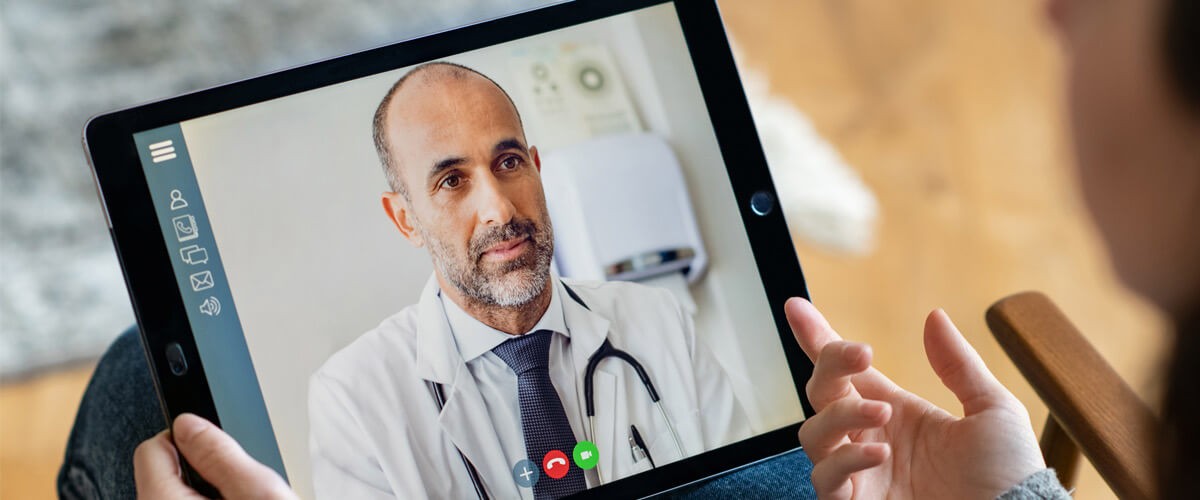
You may have noticed an uptick in telemedicine offerings and requests over the last few months. We’ll explore the “why” behind this surge and outline IT best practices for organizations making the shift.
How has telehealth become what it is today?
The practice of telemedicine has been around since the late 1950s when doctors began using photos and videos to transmit data in an academic setting. Since its debut, we’ve seen telemedicine delivered to address a broad range of needs: to manage ongoing conditions like diabetes, to address everyday care issues like rashes or to determine the level of care required for urgent symptoms such as a sinus infection. While the concept itself isn’t new, the level of application required has dramatically surged in the past few months.
With a national outbreak declared in the United States, researchers discovered telehealth visits increased more than 50% for the month of March alone.
Prior to the coronavirus outbreak, cost, availability and uncertainty over the personability virtual appointments could provide slowed the adoption of telehealth. But in response to the highly contagious virus, the government and healthcare systems around the country had to quickly ramp up virtual health care to comply with stay-at-home orders, prevent the risk of overrunning healthcare facilities, and protect both patients and providers.
Now, low-risk patients have the option to avoid exposure by seeking aid from the comfort of their homes. Hospitals with overwhelmed Intensive Care Units (ICUs) also benefit as teleconferencing enables knowledge sharing between ICU-specialists and other providers currently being assigned to areas they may not be familiar with in order to fill the needs gap.
Increased interoperability has led to increased data transfer. When more companies are able to collaborate, the likelihood of successful research and treatment improves. It also provides a method for providers to keep high-risk patients safe with minimal bedside contact by allowing communications to be carried out from outside the room via video conferencing.
Benefits of telemedicine:
- At-home convenience
- Faster diagnosis & treatment
- Greater reach to rural communities
- Remote monitoring options
- Knowledge-sharing capabilities
- Safety for high-risk patients
- Technological insights & data tracking
Rural areas are another segment that leverage telehealth services to provide care at a greater scale, alleviating the strain on doctors and nurses. More than 120 rural facilities have closed in the last 10 years, further limiting the care people receive in remote communities. Telehealth continues to be a way to connect patients to vital care services from counseling support, symptom diagnosis, monitoring and maintenance, and more. On top of all of this, we’re seeing challenges where there’s a growing disparity in the ratio of doctors to patients.
The World Health Organization reported that in the U.S. alone, there are only about 2.6 doctors per 1,000 patients.
Which brings up the questions: How are healthcare organizations going to deliver the same level of care, especially during surges, in a remote but connected way? How can doctors and hospitals address the pain points of different communities given any short-term limitations of either resources or expertise?
We have to adapt quickly. Afterall, we can expect telemedicine to stick around long after this outbreak and continue to be a valuable resource for collecting medical data remotely, safely and conveniently. But we cannot expect facilities to rip and replace their entire systems to meet these needs.
Rather, we hope healthcare organizations can add intelligent technology on top of the existing setup to bring greater value to their offerings. Artificial intelligence, machine learning, edge devices and the Internet of Things (IoT) will all play a significant role not only in expanding healthcare, but also in helping care facilities evolve beyond decades-old infrastructure.
This motion will also require organizations to revisit existing security protocols. As patients rely on virtual appointments to meet with providers, confidential information will need to be protected in transit and in the data center or cloud.
Smart systems can increase data consumption and protection, forecast care models and reduce length of stay for those who require in-person care.
Of course, we’re still going to expect and encourage people to go into urgent care or their physician’s office when they feel unwell, but on an as-needed basis. For those seeking a consultation, are checking in on an existing maintenance plan or need to renew a prescription, their doctors and nurses can look and listen for key symptoms through a monitor and remotely provide directions for care.
IoT-enabled, smart IT is a game-changer for telehealth. It provides real-time support, helps providers treat chronic diseases anytime, anywhere and enables hospitals to better predict influxes according to seasonality or situational occurrences. As the healthcare space continues to evolve, we can expect these solutions to evolve along with it. The goal always being to provide safer, more effective care.
According to the Office of the National Coordinator for Health Information Technology, organizations looking to uphold an effective telehealth service will require:
- Sufficient bandwidth provided by an affordable, reliable broadband service to prevent dropped connections
- Imaging technology or peripherals to enable at-home health treatments even if the patient is miles away
- Secure infrastructure to store, manage and protect confidential patient data on premises or in the cloud
- Proper training for staff to adapt care services in order to provide high-quality care through a different medium
Explore purpose-built connectivity solutions for healthcare. Learn more
About the Authors:

Kristopher Blasi
Director, Inside Sales Strategy – Commercial IDC, Insight
With more than 20 years of experience in sales and sales leadership in the U.S. and Canadian markets, Kristopher is skilled in relationship building for business development, global business, complex sales strategy, leadership business operations and mentoring.

Brian Cea
Former Sr. Manager, Business Development – Healthcare (2014–2022), Insight
With more than 20 years of experience in healthcare and technology, Brian is a recognized leader with a passion for assisting and supporting organizations in achieving the best possible patient outcomes by leveraging the latest technologies that impact providers, patients and all stakeholders in healthcare.
Sources
Lustig, T. (2012). The Role of Telehealth in an Evolving Healthcare Environment. Institute of Medicine of the National Academies.
Coombs, B. (2020, April 4). Telehealth Visits Are Booming as Doctors and Patients Embrace Distancing Amid the Coronavirus Crisis. CNBC.
Muchmore, S. (2020, Feb. 18). Last Year Saw 19 Rural Hospitals Close, Most in Nearly a Decade. HealthcareDive.
World Health Organization. (2018).
Office of the National Coordinator for Health Information Technology. (n.d.).




Related articles
Narrow your topic:

About Tech Journal
Tech Journal is a free, quarterly digital magazine written by IT pros, for IT pros. It incorporates thought leadership on a range of topics, including supply chain optimization, workplace collaboration, cloud and data center transformation, and digital innovation. Dive into the trends and solutions shaping today’s IT and business landscape and hear best practices firsthand from the experts themselves.
Learn more about how Insight can help you manage today's needs and prepare for the future.